Case Study
Implementation of a VVMF for Well Water Treatment in Kalamna Village
Background
Kalamna Village, a rural community, relies on a well as its primary source of drinking water. Water is pumped from this well to an Elevated Service Reservoir (ESR), from where it is distributed to the villagers. Throughout most of the year, the water quality remains adequate for general household use with some basic treatment, which includes disinfection using an existing electro-chlorination system.
However, during the monsoon season, water quality significantly deteriorates. This seasonal degradation is due to a nearby runoff stream, which introduces muddy water into the well, affecting clarity and overall quality. To counter this, the local Gram Panchayat has traditionally used large quantities of bleaching powder dumped directly into the well, a practice with no precise dosing or testing. This approach raises concerns over possible chemical overdosing, potentially impacting public health.
Problem Statement
The onset of monsoon season brings a sharp decline in well water quality, resulting in increased turbidity and potential contamination. The Gram Panchayat’s method of adding large amounts of bleaching powder poses a health risk, as it lacks dosing accuracy and water quality testing, while not tackling the major issue of particulate contaminants.
Solution: Deployment of Variable Voids Media Filter (VVMF)
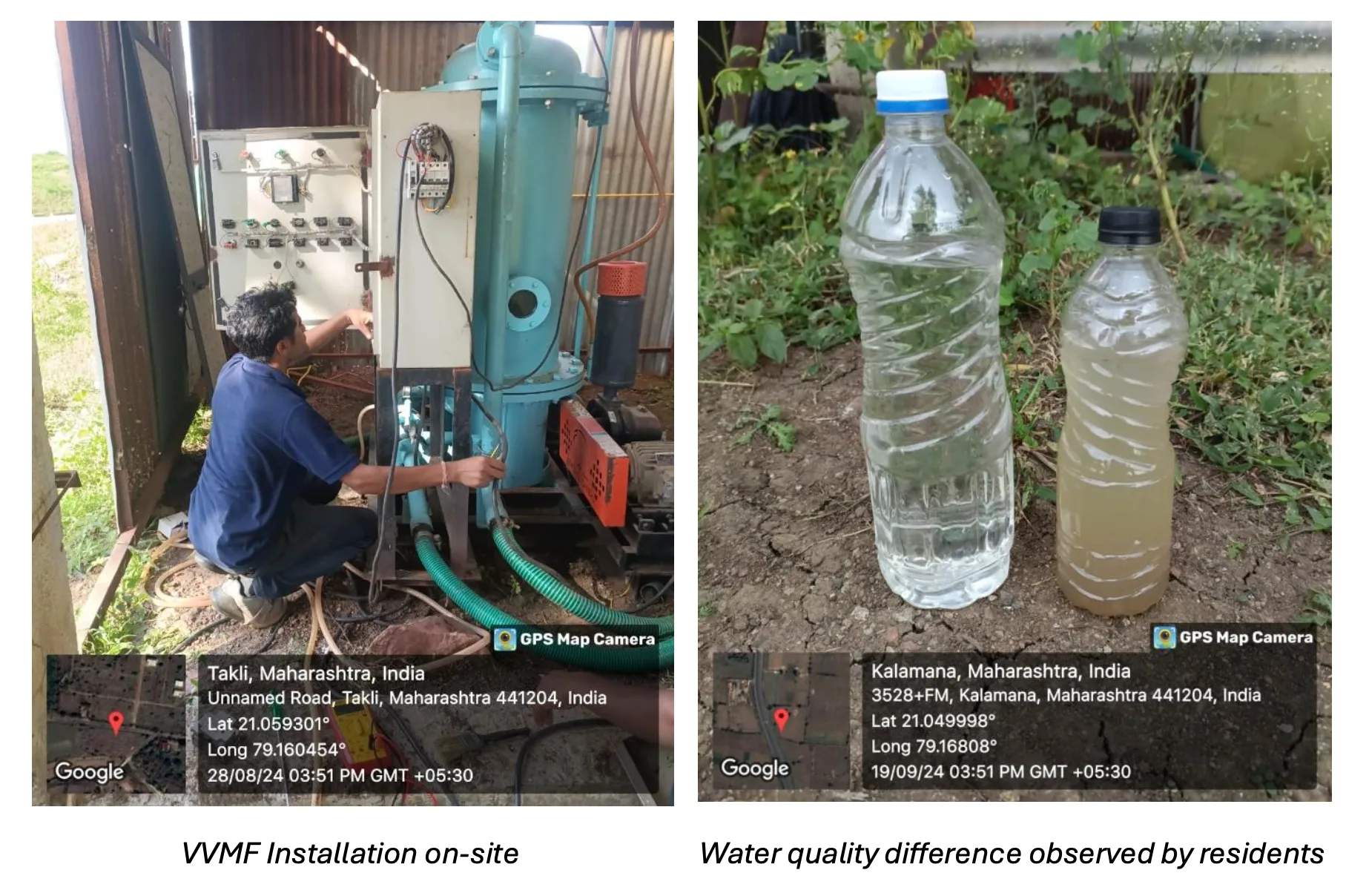
To address these issues, Vayuj provided a Variable Voids Media Filter (VVMF) system to the Gram Panchayat on a loan basis for the 2024 monsoon season. This system was installed near the pump room and retrofitted to the existing pipeline, facilitating seamless integration into the village’s water distribution infrastructure.
Implementation
The VVMF system installation aimed to:
• Improve visual clarity and quality of well water.
• Reduce suspended solid levels by removing particulates introduced by runoff.
• Minimize reliance on chemical disinfection, thus reducing chemical contamination levels.
Vayuj's Role
Vayuj played a key role in providing both design and implementation expertise for the project, ensuring that the proposed solution would meet the stringent requirements of the NMCG and the Central Pollution Control Board (CPCB). Our scope of work included:
- Hydraulic and piping design: To ensure smooth operation under challenging conditions, Vayuj designed an efficient hydraulic and piping system capable of handling fluctuating flow and high contaminant levels.
- Plant design in a restricted area: Working within space constraints, we engineered a compact yet highly efficient design for the treatment plant.
- Ozone distribution system: We designed and implemented the in-drain distribution system to effectively distribute ozonated water, ensuring thorough treatment of the sewage before discharge.
- Installation and commissioning: Vayuj oversaw the complete installation and commissioning of the system, ensuring it was up and running within the given timeframe and met all operational requirements.
Results
Following the VVMF installation, significant improvements were observed:
- Water Quality Enhancement: The treated water displayed substantially clearer visual
characteristics, marking a noticeable quality improvement. - Reduction in Suspended Solids: The VVMF system reduced suspended solid levels by up
to 80% compared to raw well water. - Reduced Chemical Dependency: The need for additional bleaching powder was
eliminated, thereby reducing the levels of chemical contaminants in the drinking water
supply.
Conclusion
The introduction of the Variable Voids Media Filter (VVMF) has provided Kalamna Village with a more sustainable and effective method for treating well water. A proposal is already underway for the permanent installation of the VVMF with the full support of local authorities. This intervention not only improved water quality but also demonstrated a healthier alternative to the indiscriminate use of bleaching powder, aligning with Vayuj’s commitment to enhancing water treatment solutions for community health and well-being.
Future Considerations
The success of this deployment underscores the potential for further adoption of VVMF technology in similar rural settings. Continued monitoring and potential scale-up of this solution could lead to broader health benefits for neighbouring rural communities as well as urban centres.